- #370 QS Global World Ranking
- PublicStatus
- Very HighResearch Output
- 945Total Students
- 145Faculty
- 38Int'l Students
The University’s position in the current QS World University Rankings.
Whether the University is funded by the government of that country or state, or funded by private donations.
The research intensity of the University, based on the number of papers output relative to the University’s size.
The number of full time equivalent students enrolled at the University.
The number of full time equivalent teaching staff employed by the University.
The number of full time equivalent international students enrolled at the University.
DGIST
About
During the past 10 years, DGIST has become exceptionally innovative and made remarkable advancements under the notion of becoming ‘a world-leading convergence research university’. DGIST has taken various steps such as: establishing innovative undergraduate curriculum and six graduate curricula focused on convergence specialized fields, constructing its campus with cutting-edge facilities on the massive secured area of 670,000m2 under the Campus Master Plan, and achieving remarkable research results. DGIST has been able to make vast advancements despite numerous challenges along the way in the 10 years since its founding. This progress has been made possible thanks to the exclusive support of the government, the sincerest trust of our chairman and committee members of the DGIST Board of Trustee, and the efforts and devotion of our faculty, students, researchers, and staff. DGIST started with a research institution in 2004 and grew into a research-oriented university by opening graduate program in 2011, and the undergraduate program in March, 2014.
DGIST focuses its research and education in six areas, such as Emerging Materials Science, Information & Communication Engineering, Robotics Engineering, Energy Systems Engineering, Brain Science, and New Biology. The six areas are called ‘MIREBraiN’: M for Materials, I for Information & Communication, R for Robotics, E for Energy, B for Brain, and N for New Biology. The pronunciation of MIRE in Korean is the same to that of ‘future.’ DGIST’s vision, which was declared in May 2012, is to become a world-leading convergence research university by nurturing the global leaders of knowledge creation and creating future convergence technology.
About
During the past 10 years, DGIST has become exceptionally innovative and made remarkable advancements under the notion of becoming ‘a world-leading convergence research university’. DGIST has taken various steps such as: establishing innovative undergraduate curriculum and six graduate curricula focused on convergence specialized fields, constructing its campus with cutting-edge facilities on the massive secured area of 670,000m2 under the Campus Master Plan, and achieving remarkable research results. DGIST has been able to make vast advancements despite numerous challenges along the way in the 10 years since its founding. This progress has been made possible thanks to the exclusive support of the government, the sincerest trust of our chairman and committee members of the DGIST Board of Trustee, and the efforts and devotion of our faculty, students, researchers, and staff. DGIST started with a research institution in 2004 and grew into a research-oriented university by opening graduate program in 2011, and the undergraduate program in March, 2014.
DGIST focuses its research and education in six areas, such as Emerging Materials Science, Information & Communication Engineering, Robotics Engineering, Energy Systems Engineering, Brain Science, and New Biology. The six areas are called ‘MIREBraiN’: M for Materials, I for Information & Communication, R for Robotics, E for Energy, B for Brain, and N for New Biology. The pronunciation of MIRE in Korean is the same to that of ‘future.’ DGIST’s vision, which was declared in May 2012, is to become a world-leading convergence research university by nurturing the global leaders of knowledge creation and creating future convergence technology.
University highlights
Similar Universities
NEOMA Business School France
9 Rue d'Athènes, Paris
The National University of Science and Technology MISIS
Leninskiy Prospekt 4, NUST MISIS, Moscow
=451 QS World University RankingsUniversidad Simón Bolívar (Colombia)
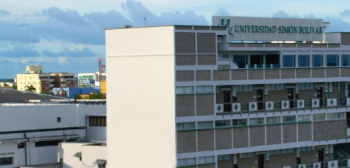
Sede Principal, Barranquilla

Russian Institute of Theatre Arts (GITIS)
Maly Kislovskiy Lane, 6, Moscow
Universidad de Sonora
Blvd. Luis Encinas y Rosales S/N, Hermosillo
Related content

Featured University

-
10 UG & 47 PGTotal courses
-
Private for ProfitStatus
-
HighResearch output