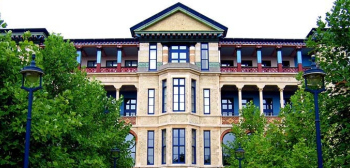
Although this Casablanca based institution was officially established in 1975, they describe themselves as being newly created in 2014 following a merger between two Hassan II universities, Mohammedia and Casablanca. The merged university is home to 103,326 students, 2,124 research professors, and 982 administrative and technical staff.
Located in Aïn Chock, a suburb of Casablanca, the university is home to 123 laboratories, 10 research centers, two technological platforms, an Observatory, and 10 doctoral study centers offering 46 doctoral courses.
Arabic and French are the tuition languages of the university. For certain disciplines, including law, international law and international relations and PhD studies, it is necessary to know both French and Arabic, however technical courses are taught solely in French. Consequently, foreign students at the university are largely from Francophone countries such as Senegal, Mauritania, Tunisia, Algeria and Libya (amongst others).
The university’s Library of Mohammad Sykat covers six floors with a total of 7,000 square meters containing 40,000 textbooks, 20,000 electronic online journals, 550 ancient manuscripts and 600 ancient books.
About
Although this Casablanca based institution was officially established in 1975, they describe themselves as being newly created in 2014 following a merger between two Hassan II universities, Mohammedia and Casablanca. The merged university is home to 103,326 students, 2,124 research professors, and 982 administrative and technical staff.
Located in Aïn Chock, a suburb of Casablanca, the university is home to 123 laboratories, 10 research centers, two technological platforms, an Observatory, and 10 doctoral study centers offering 46 doctoral courses.
Arabic and French are the tuition languages of the university. For certain disciplines, including law, international law and international relations and PhD studies, it is necessary to know both French and Arabic, however technical courses are taught solely in French. Consequently, foreign students at the university are largely from Francophone countries such as Senegal, Mauritania, Tunisia, Algeria and Libya (amongst others).
The university’s Library of Mohammad Sykat covers six floors with a total of 7,000 square meters containing 40,000 textbooks, 20,000 electronic online journals, 550 ancient manuscripts and 600 ancient books.